By Louise Irvine
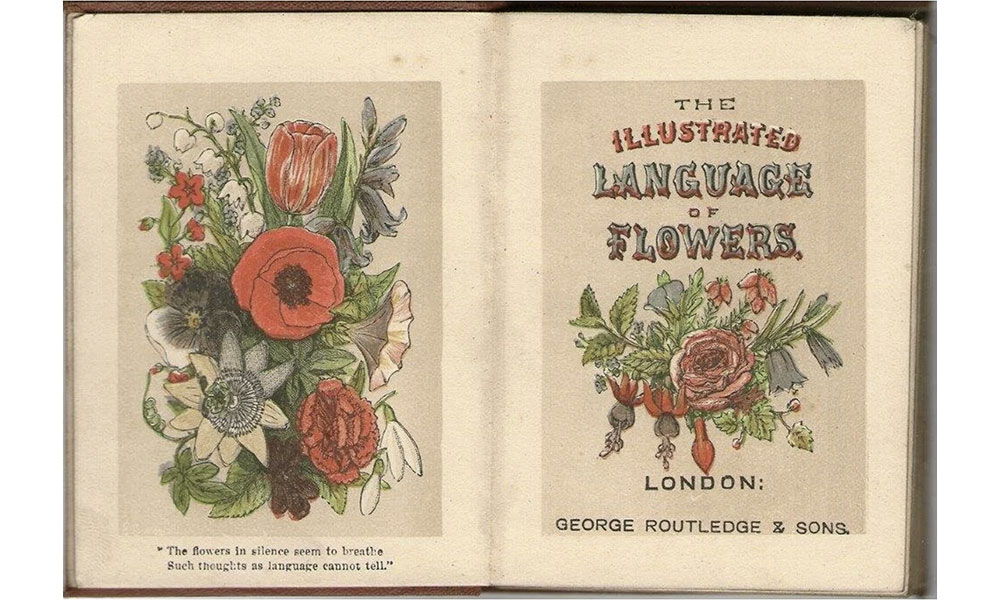
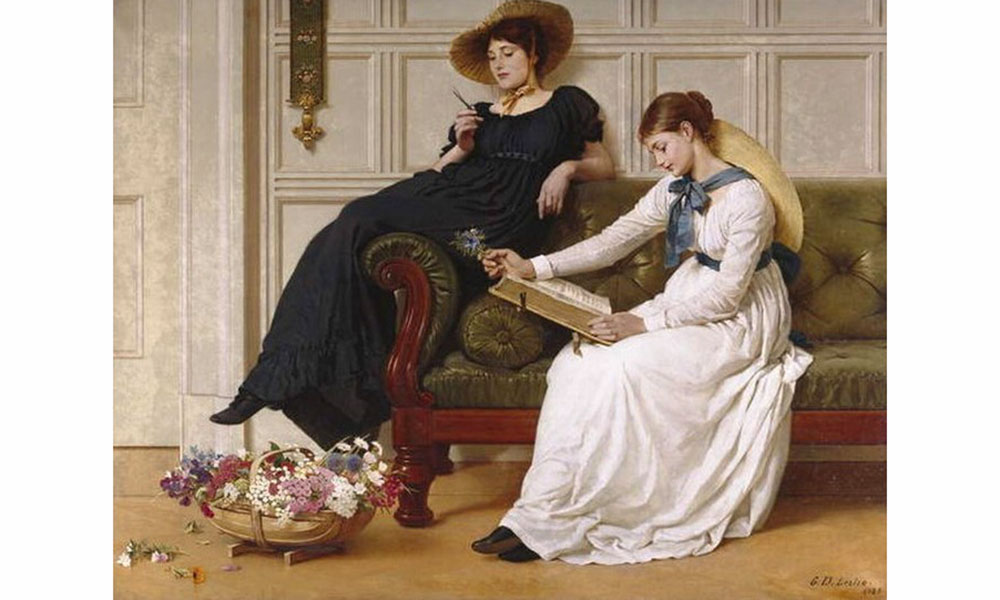
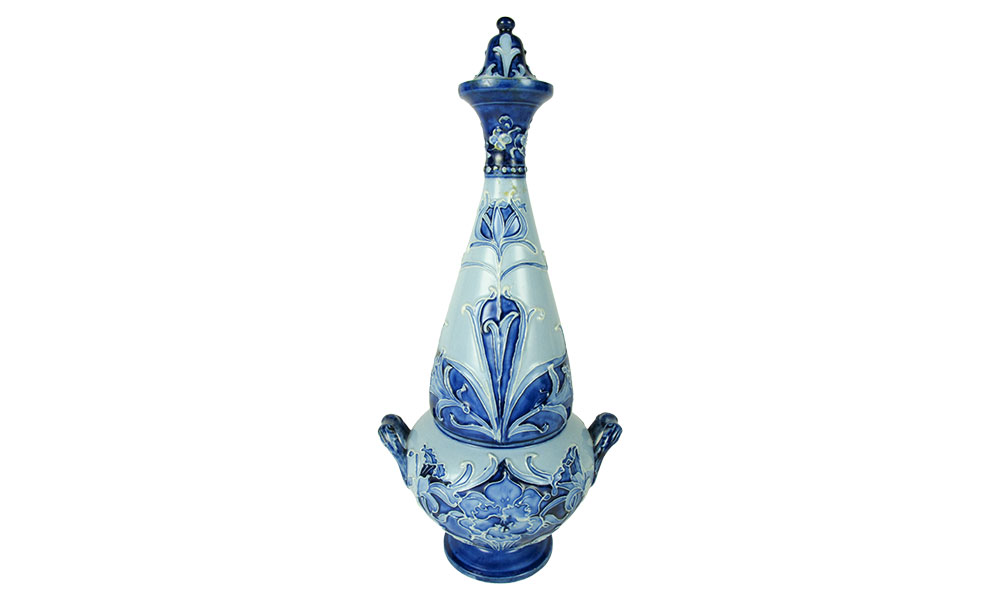
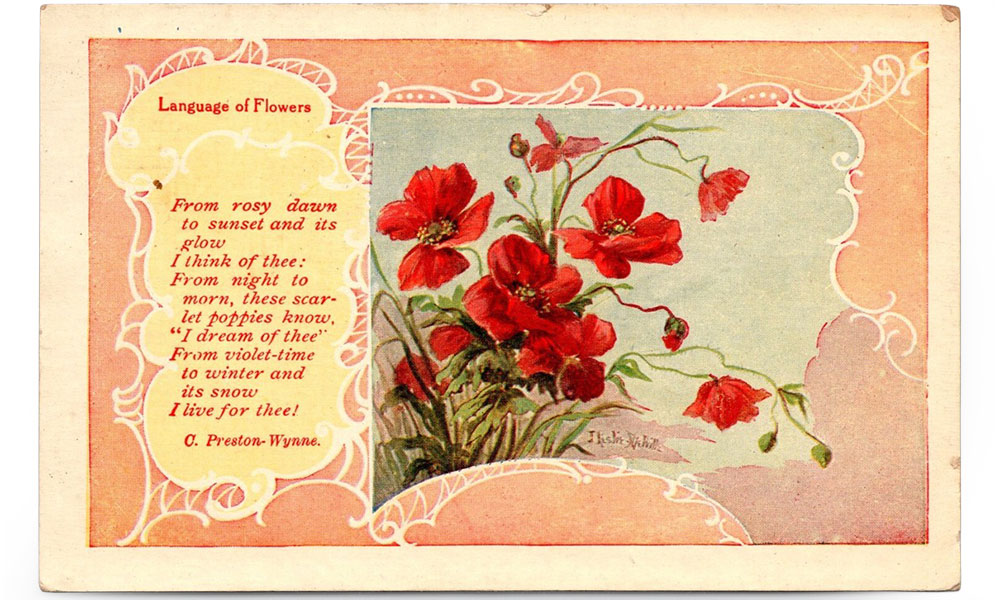
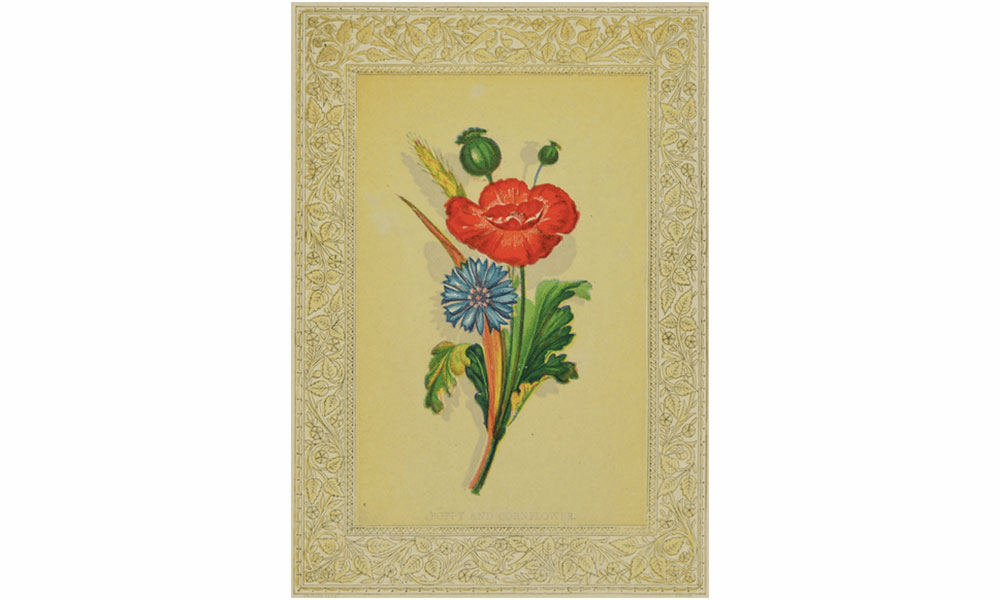
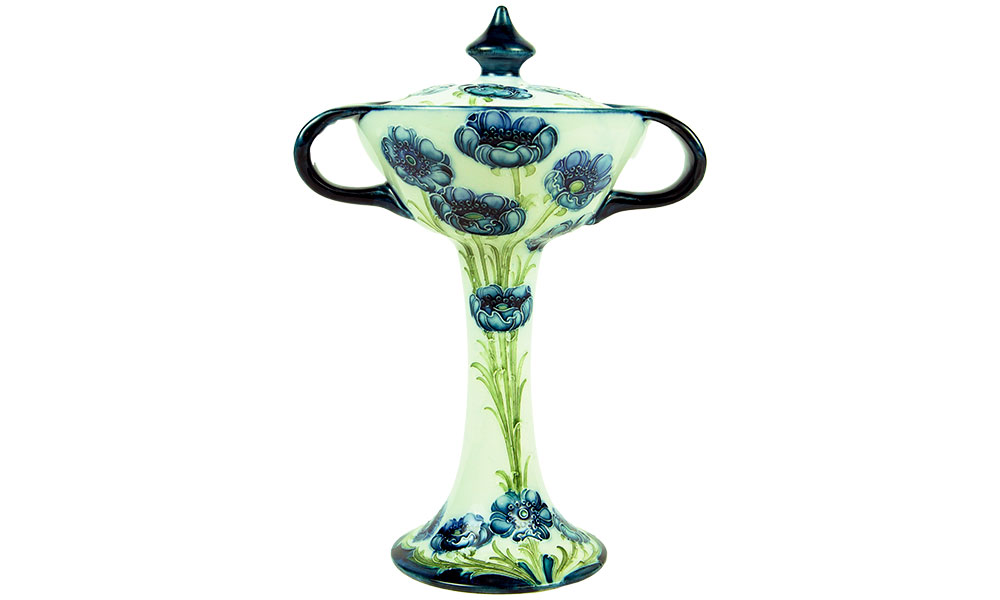
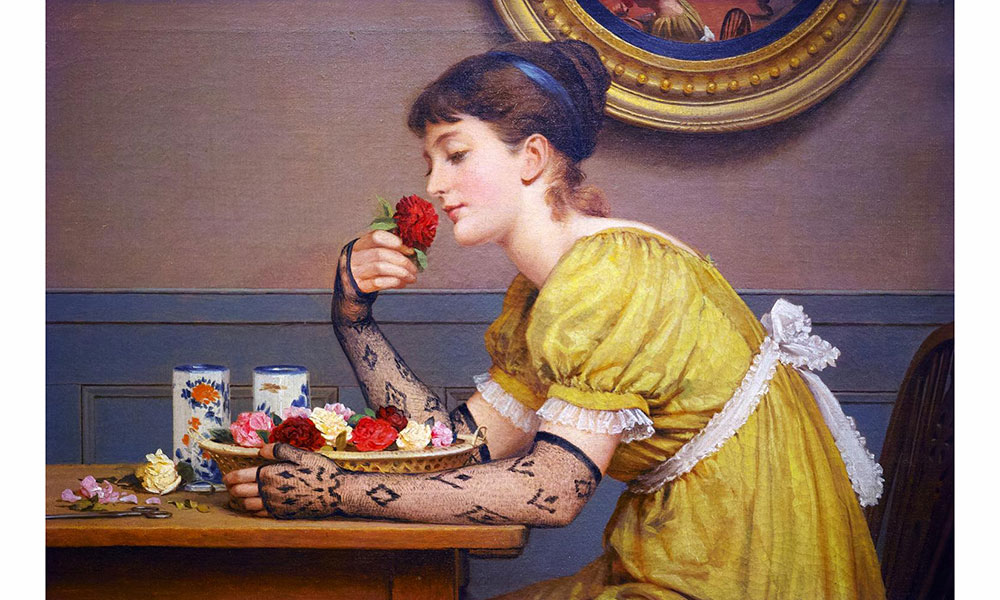
Floriography is the “language of flowers,” and secret messages were communicated through “talking bouquets” to circumvent the strict etiquette of the Victorian era. A detailed knowledge of flowers was an essential part of life and love for fashionable ladies, and British potters produced an abundance of floral vases and flowerpots to enhance their homes, notably William Moorcroft’s Florian Ware.
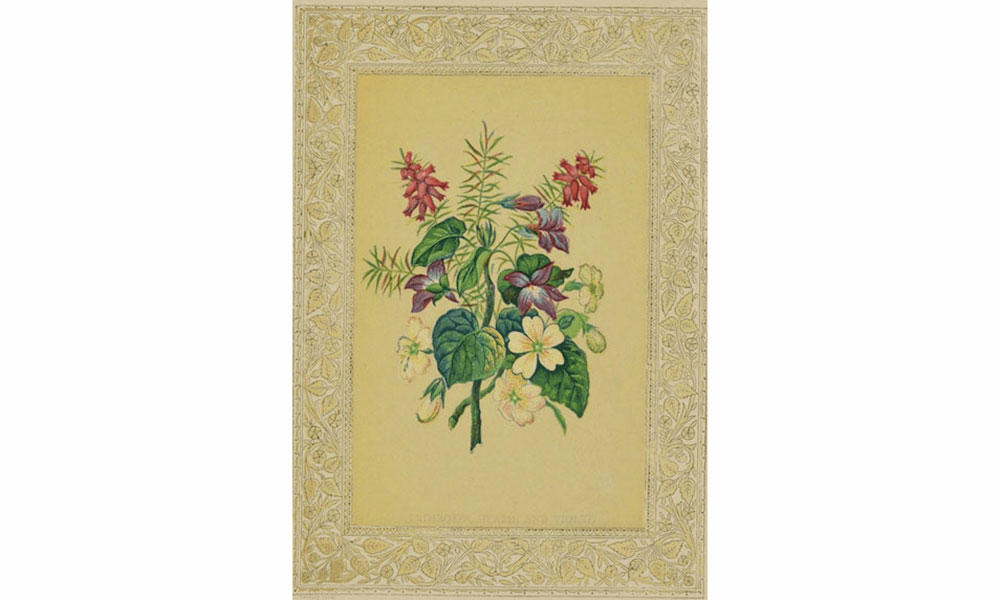
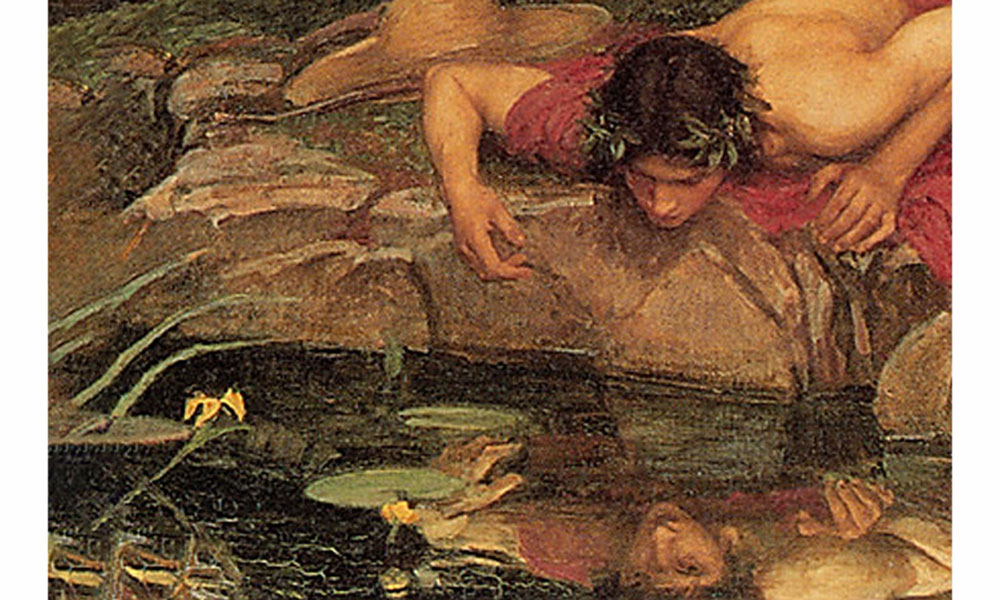
The covert meanings attributed to flowers were often derived from folklore and mythology. For instance, the narcissus was named after a beautiful youth from Greek mythology, who fell in love with his reflection in a pool of water and was transformed into a flower. The Victorian flower meaning is egotism.
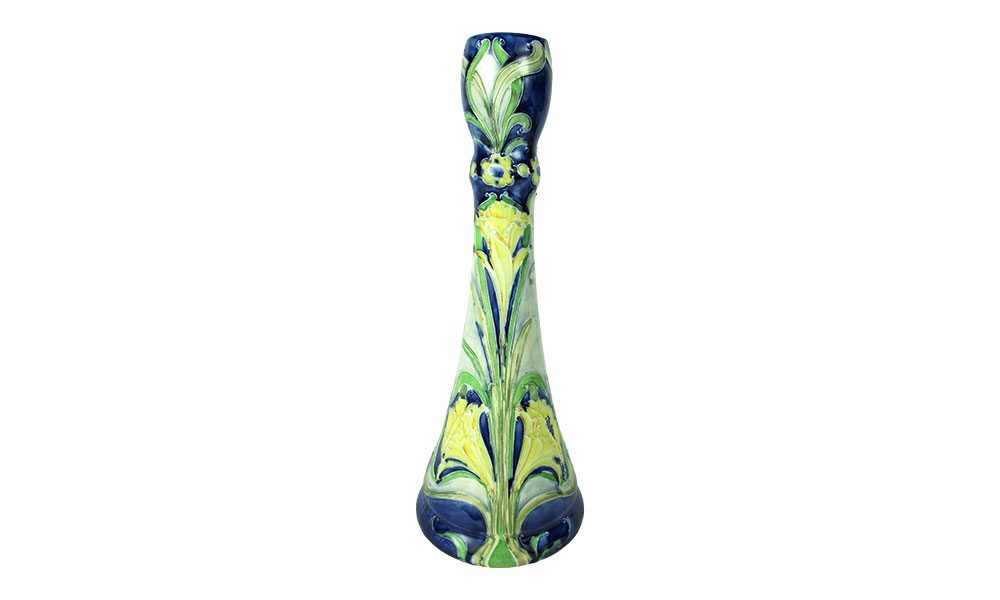
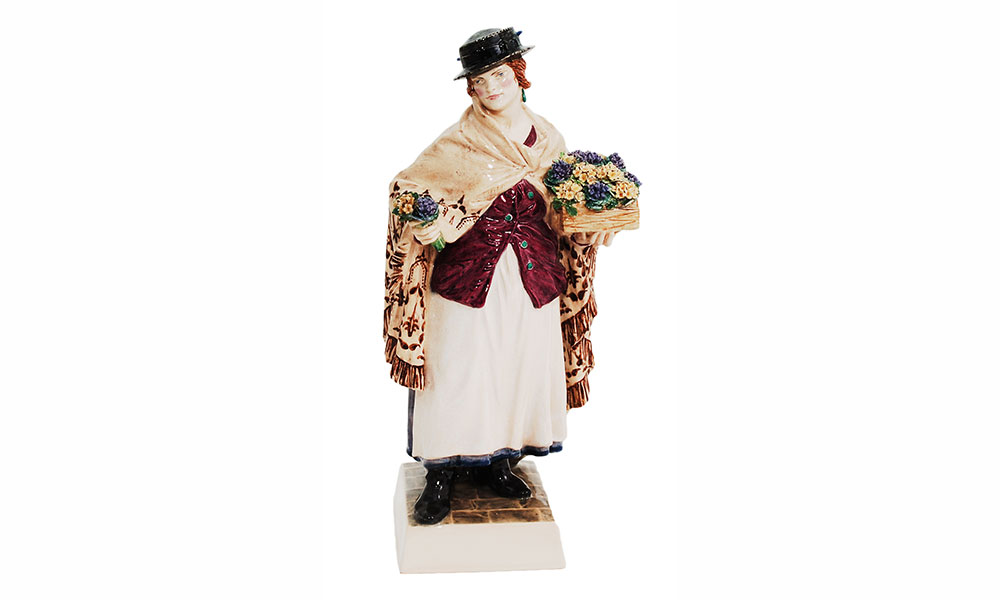
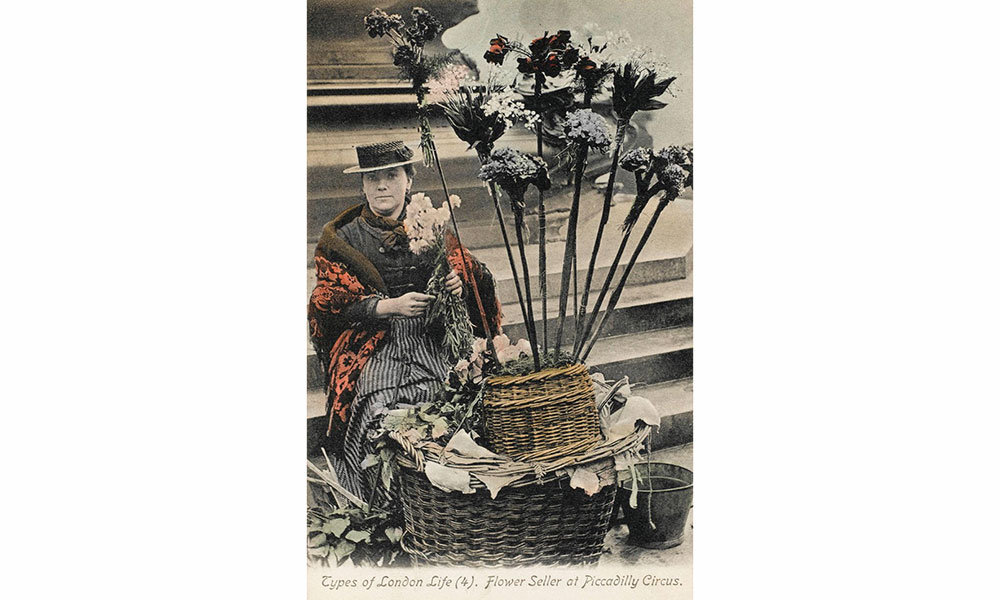
In contrast, violets symbolize modesty and humility. The violet was much revered in ancient Athens and worn as a garland to prevent headaches. It was one of Queen Victoria’s favorite flowers, and posies were sold by Cockney flower girls in London, crying, “Buy some luv’ly vi-lets.” Violets symbolize Eliza Doolittle’s humble origins in Pygmalion, which was later adapted into the musical My Fair Lady.
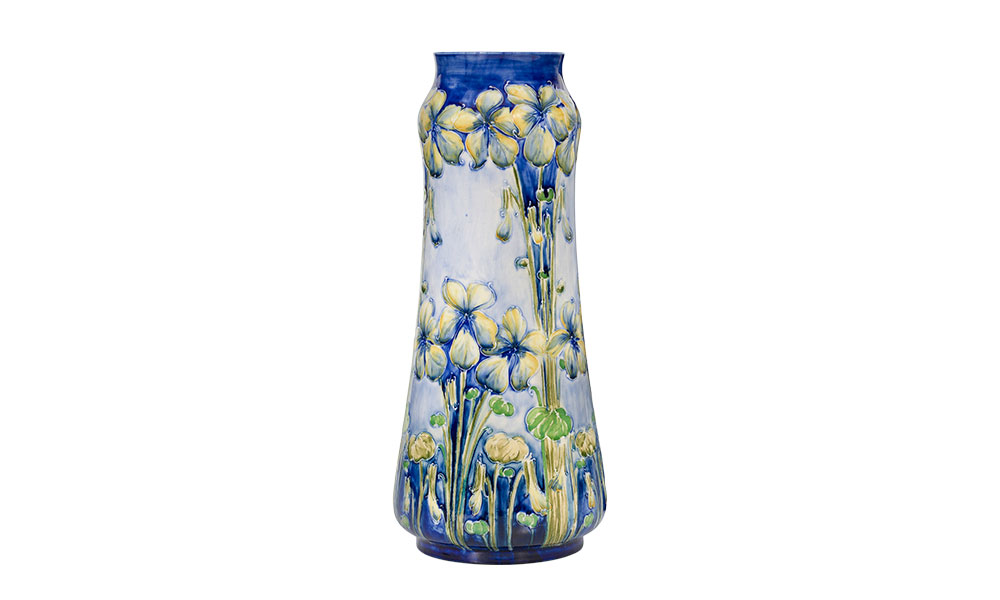

The iris was named after the goddess of the rainbow, who brought messages between heaven and earth, so the flower means “a message”. The iris was one of William Moorcroft’s favorite flowers, and he won a bronze medal for his vase design in the 1898 National Art Competition organized by the Department of Science and Art.
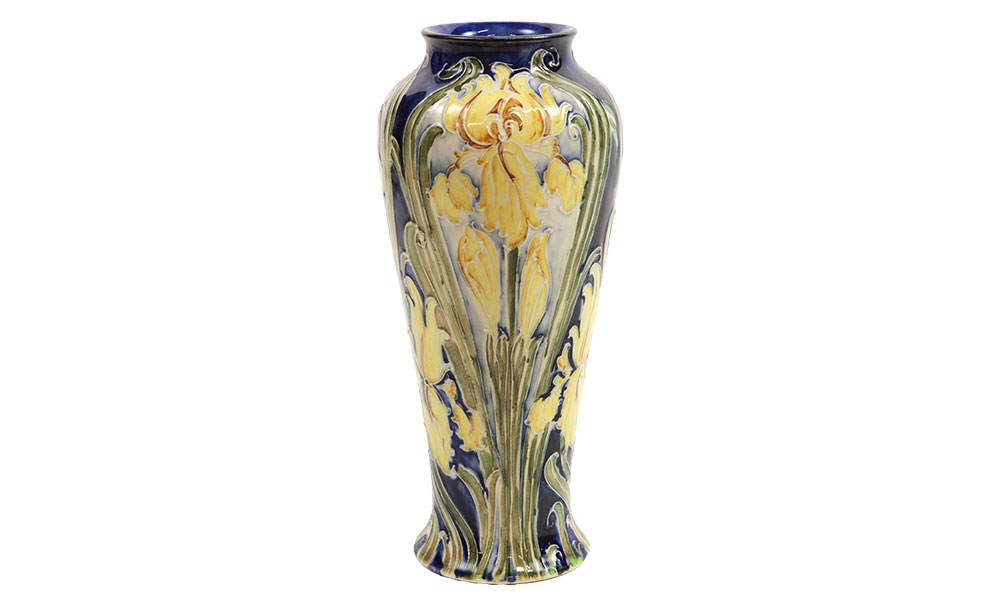
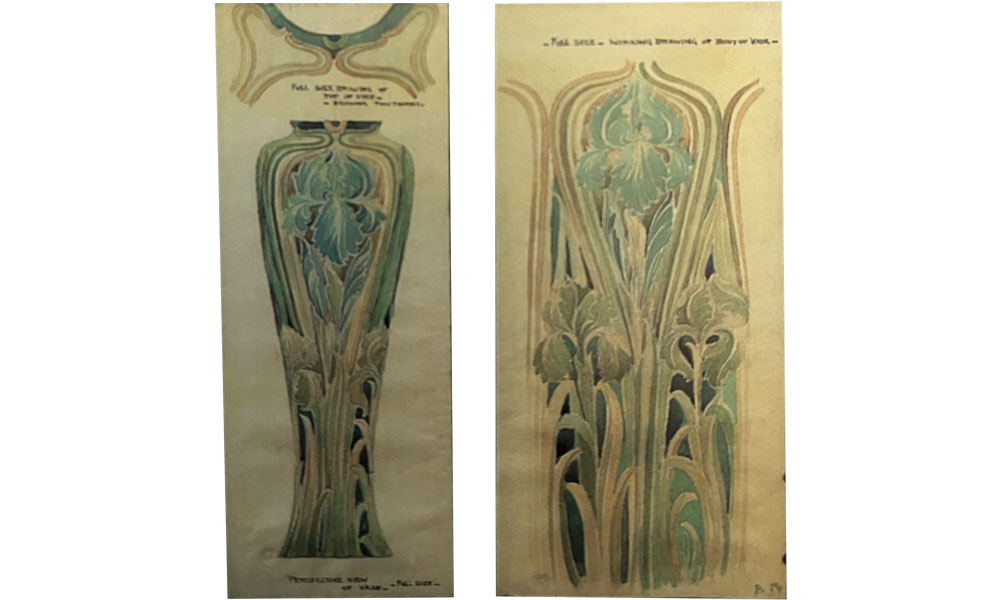
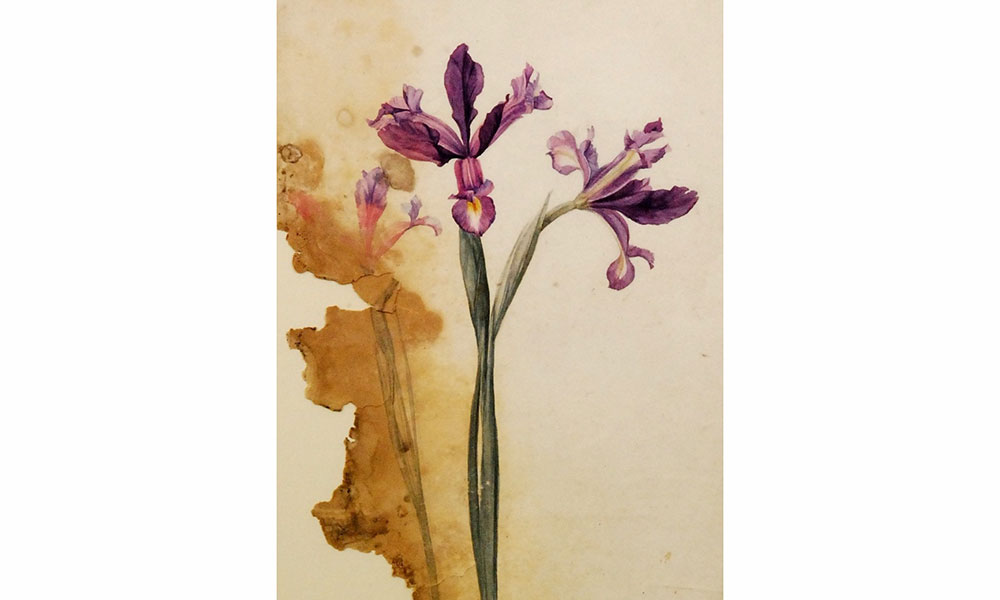
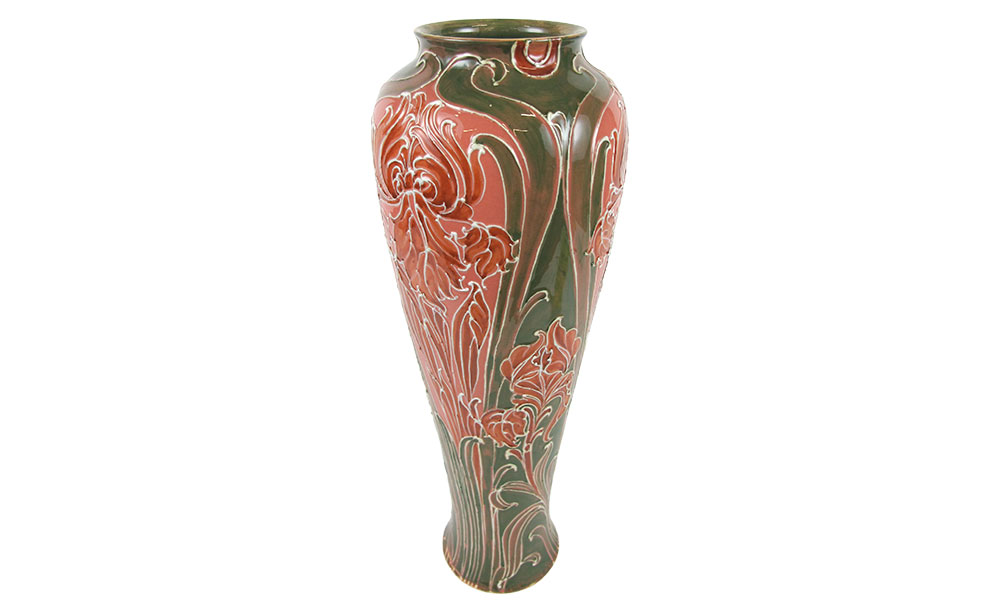
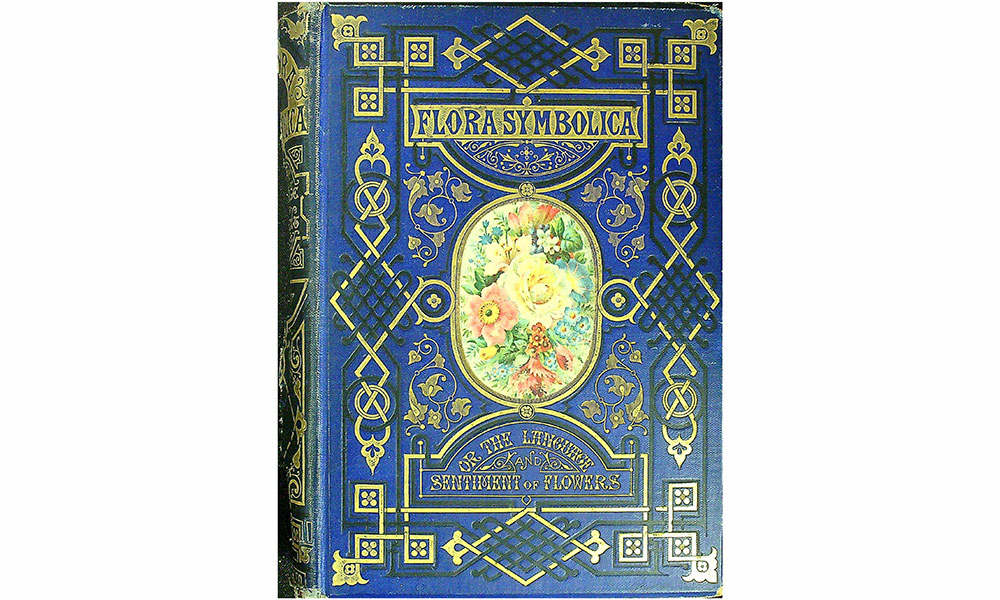
Floral sentiments were also conjured up in the imaginations of authors who compiled numerous floriography dictionaries during the 19th century. Interpretations varied considerably, so it was important to know flowers and use the same reference book as your suitor! Botanizing was a popular pursuit of the era, along with flower painting, pressing specimens, and creating potpourri. Ladies also practiced flower arranging and cultivated exotic plants in their parlors and conservatories, aspiring to bring nature indoors.
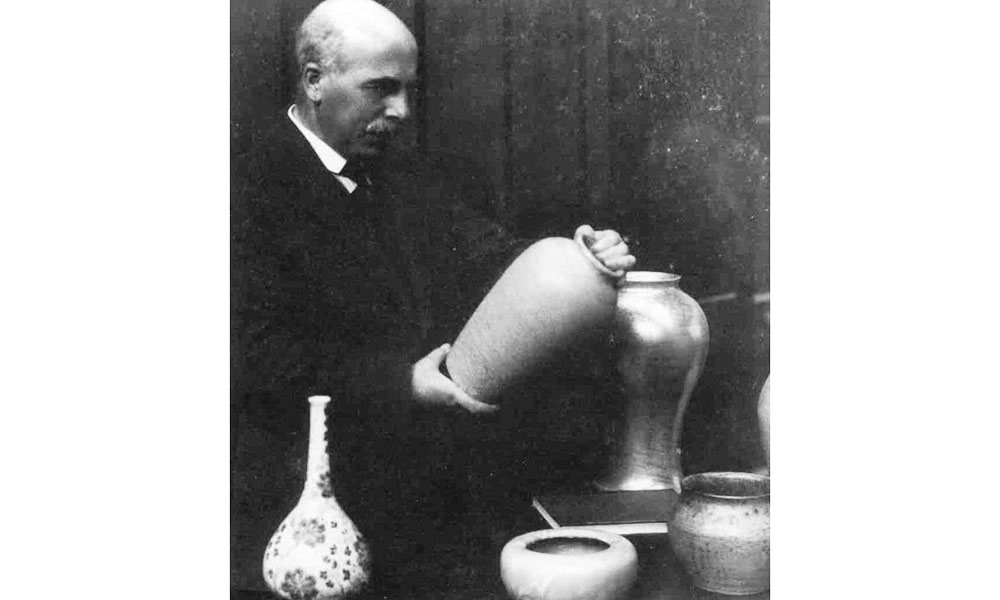
William Morris, the influential interior designer of the Arts and Crafts Movement, featured flowers for their aesthetic beauty and symbolic associations in his textiles and wallpaper patterns. William Moorcroft was particularly inspired by Morris as he embarked on his career as a ceramic designer in Staffordshire. Following his studies at the Wedgwood Institute and the National Art Training School in London, William Moorcroft secured a design position in 1897 at James Macintyre & Company’s new art pottery studio in Burslem. He became manager the following year, having quickly increased the decorative potential of slip trailing, also known as tube-lining, for his Florian Ware collection.
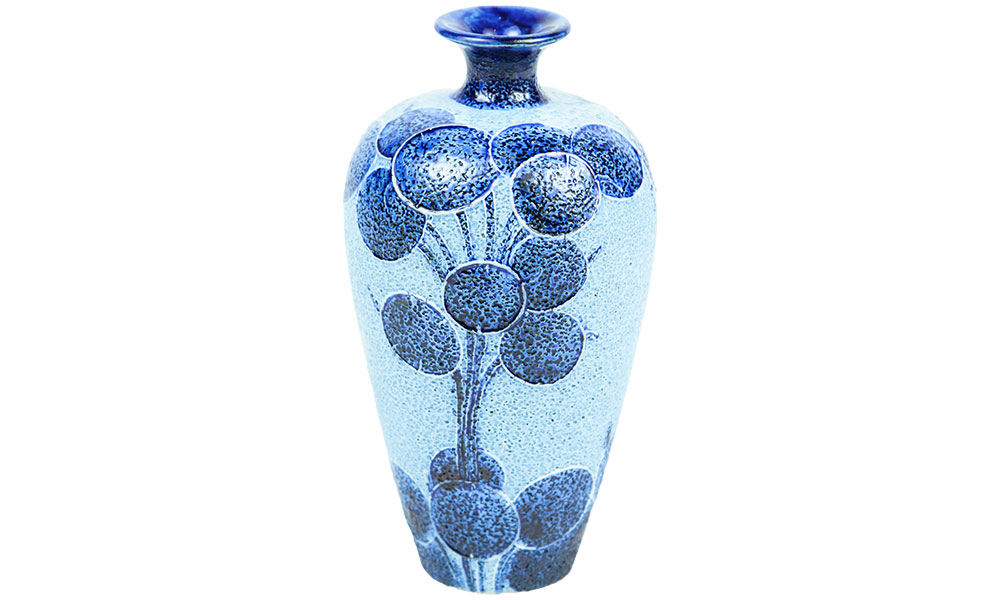
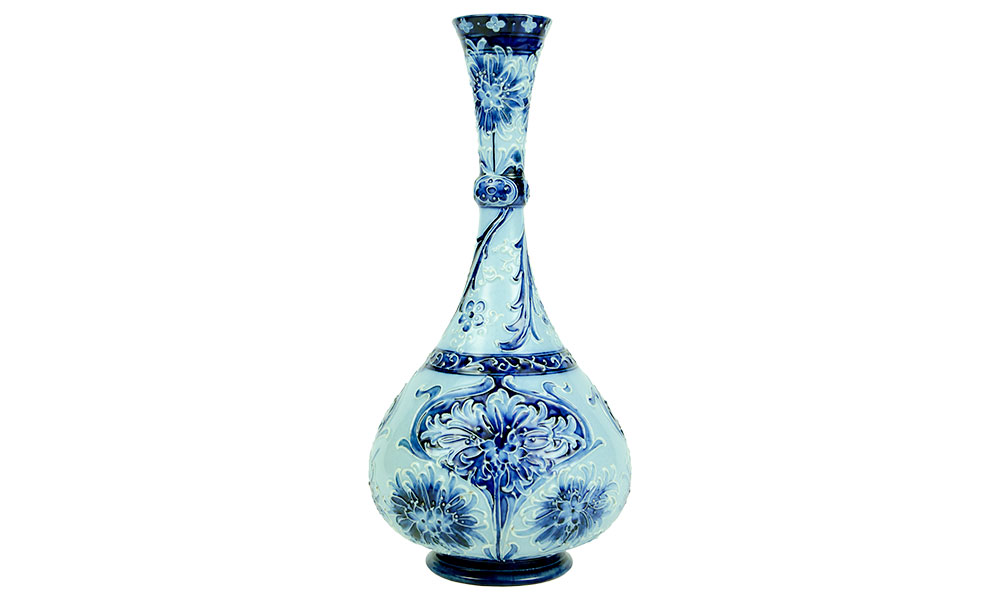
Moorcroft’s ornamental vases featuring English flowers combine flowing Art Nouveau style with the aesthetics of the Arts & Crafts Movement. Initially, his Florian patterns were presented on colored grounds, such as pale blue and green, with tube-lining in darker tones of the same color. The Honesty pattern, symbolizing its name, has an unusually rough texture that offsets the translucent seed pods. A salmon-and-green color combination also became popular in the early years.
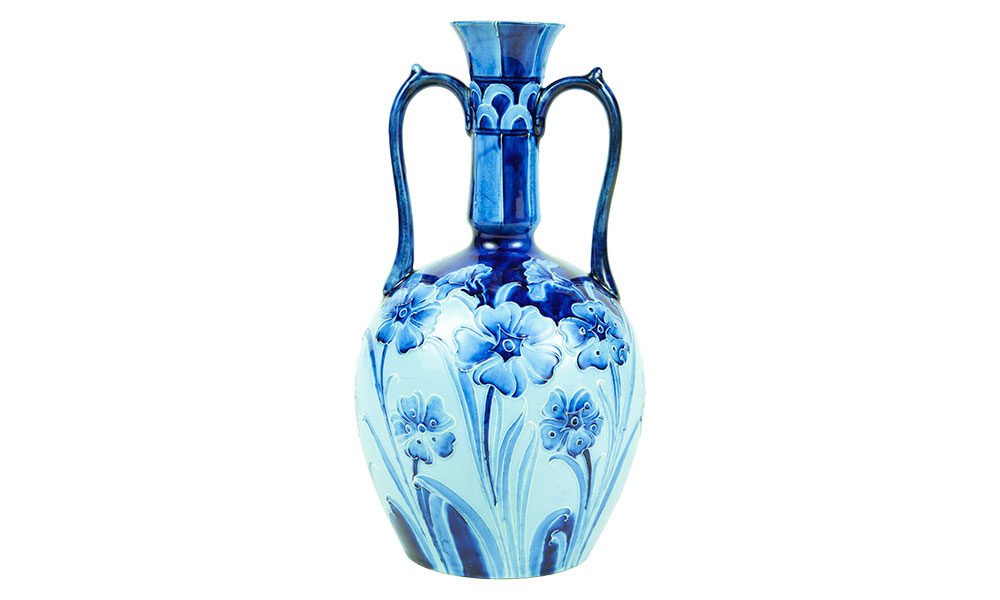
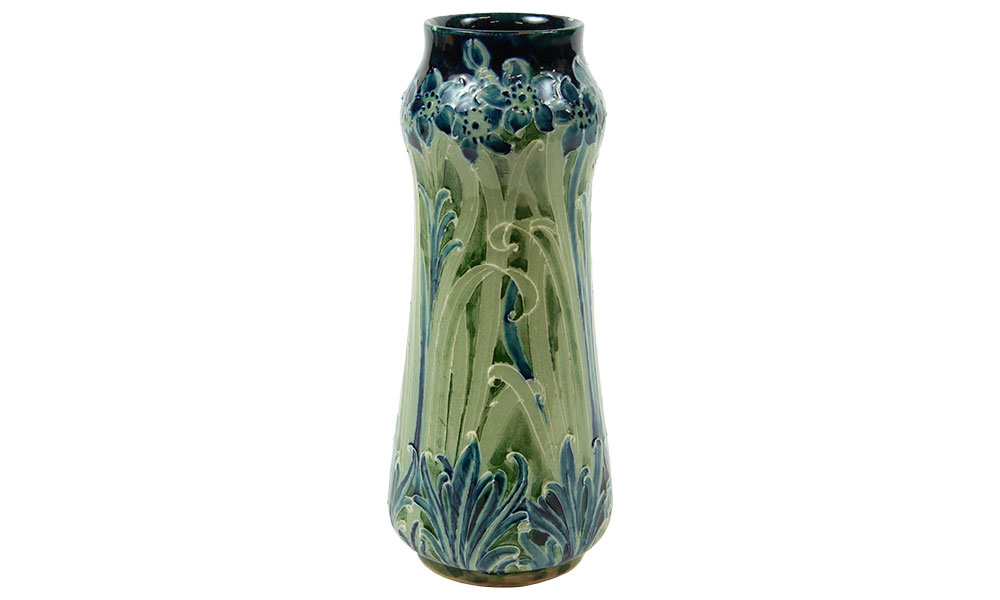
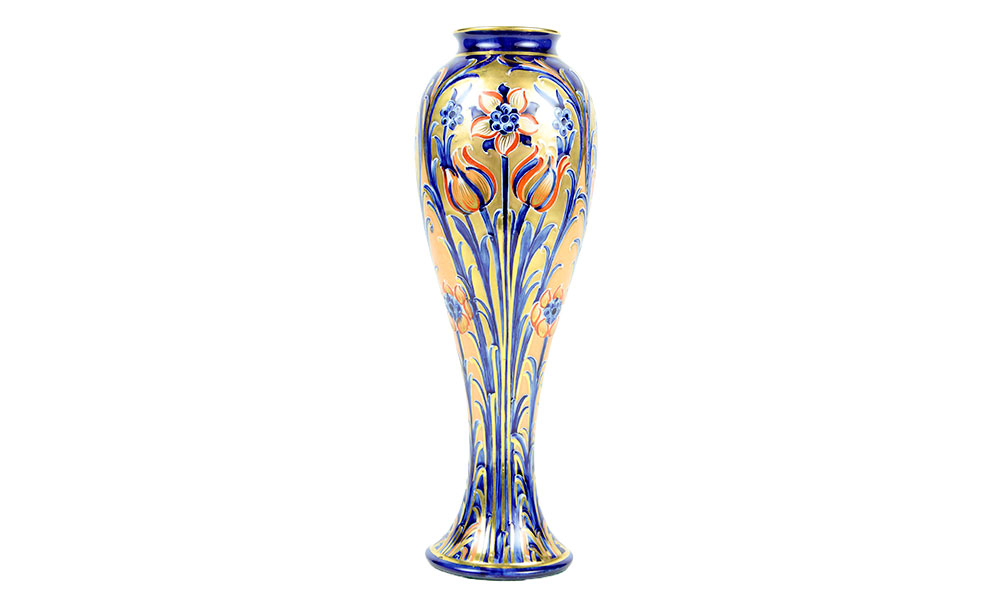
In 1903, the green-and-gold Florian Ware was introduced, featuring richly gilded, tendril-like leaves. In the Victorian language of flowers, a red tulip was a declaration of love and a yellow tulip meant hopeless love. The intricate designs were also available in blue and pink variations; the latter generally known as Alhambra. William Moorcroft frequently portrayed stylized tulips in these exotic color combinations. Tulips were a revered symbol in Ottoman art and architecture, representing divinity and paradise on earth.
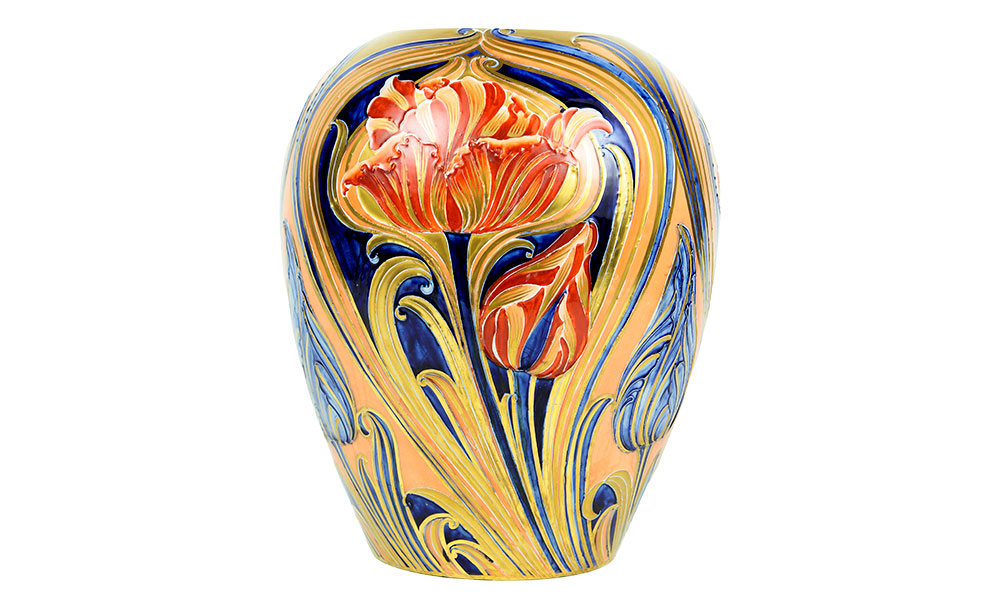
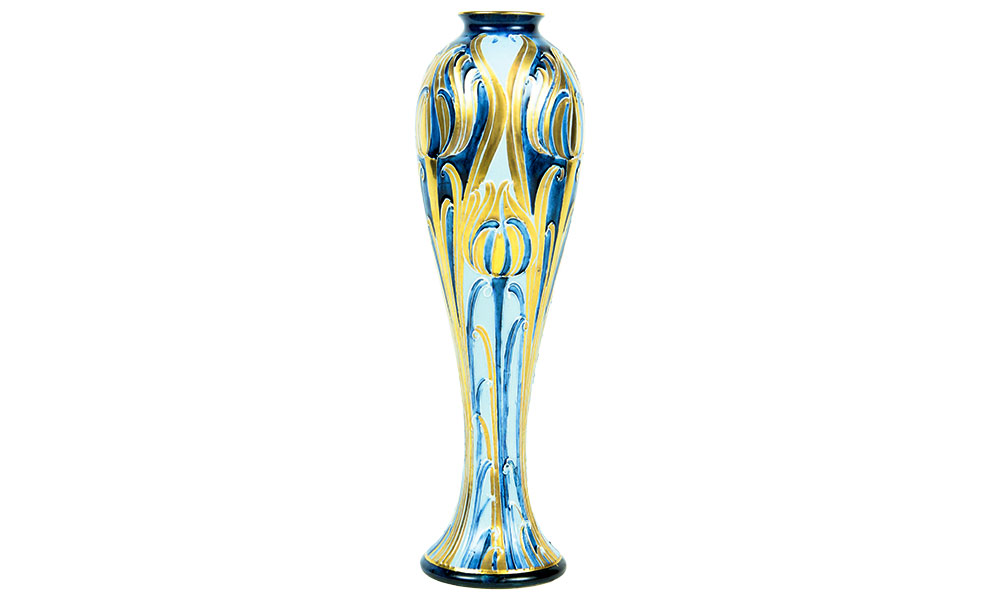
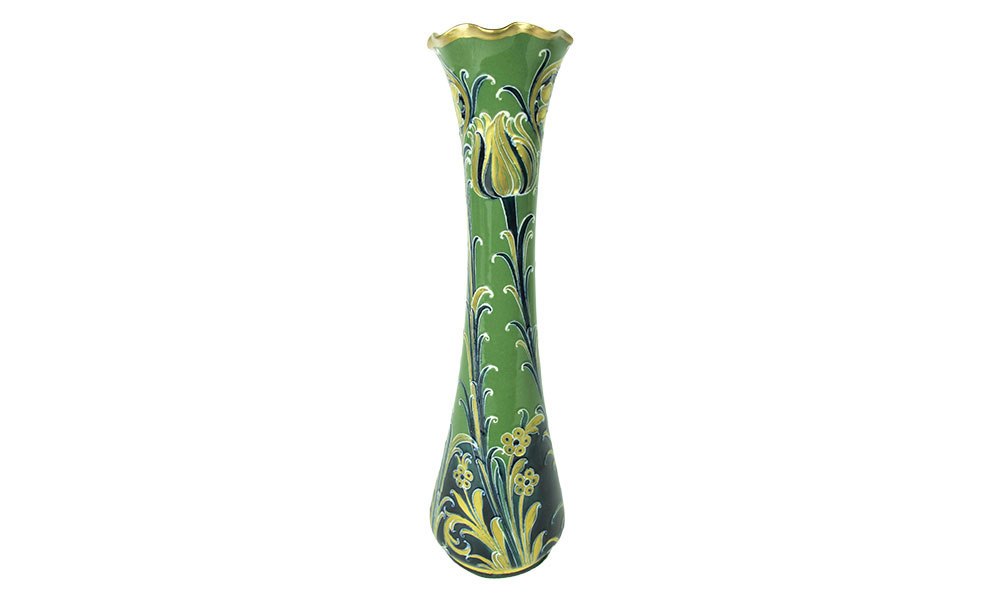
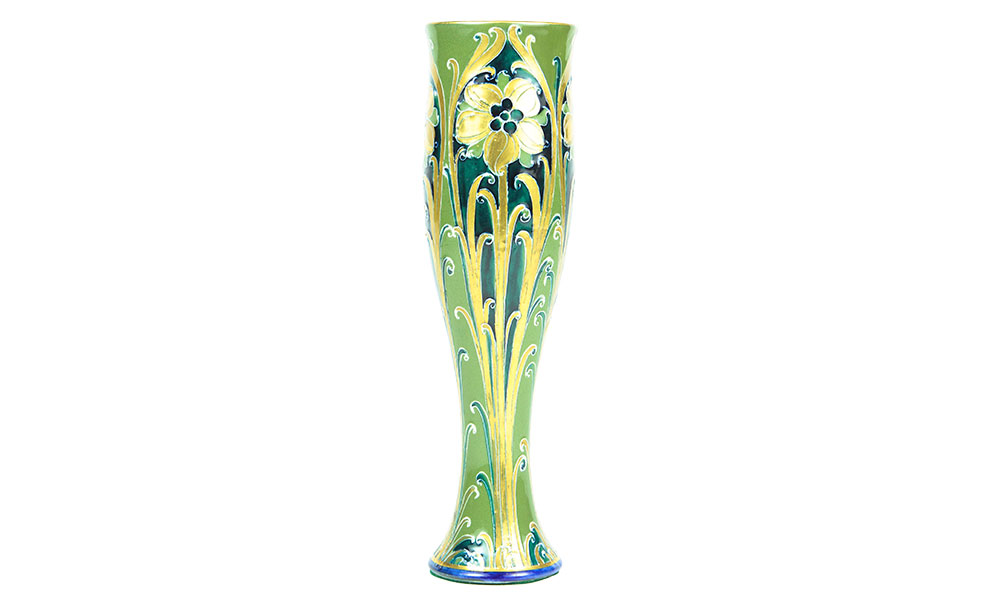
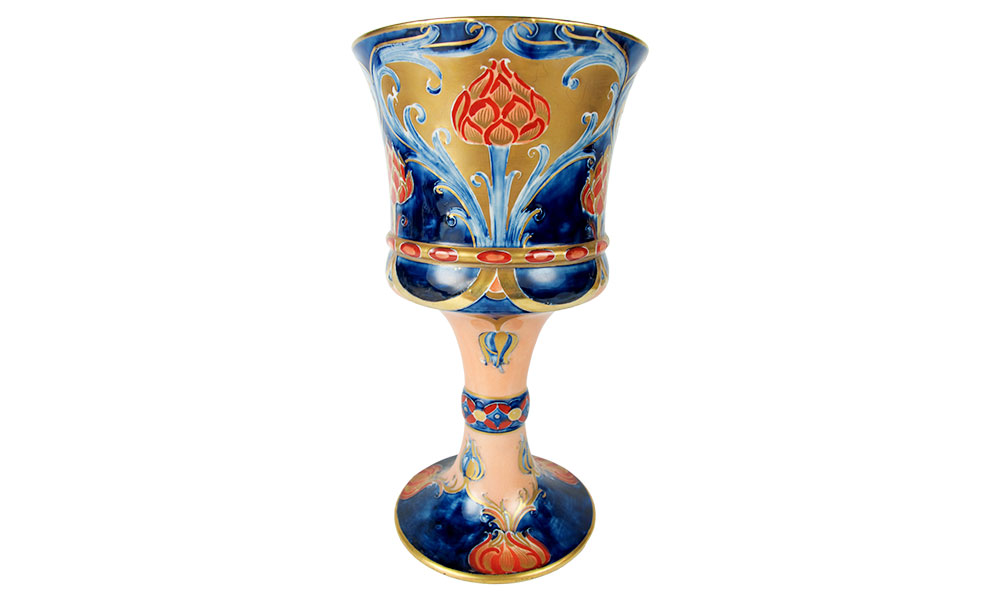
Following an expanded range of colors and improved firing control, Florian Wares also featured white or cream backgrounds. Moorcroft sometimes combined poppies, forget-me-nots, and roses, which grow together in the wild. Red poppies symbolize sleep and oblivion, but also rebirth, while blue poppies express imagination and creativity. Forget-me-nots and roses speak of love.
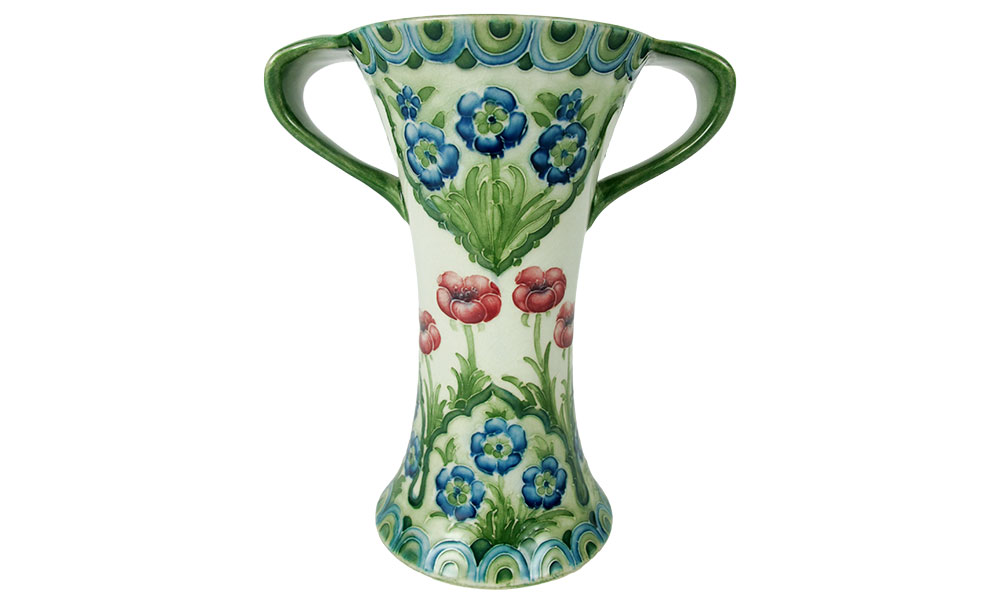
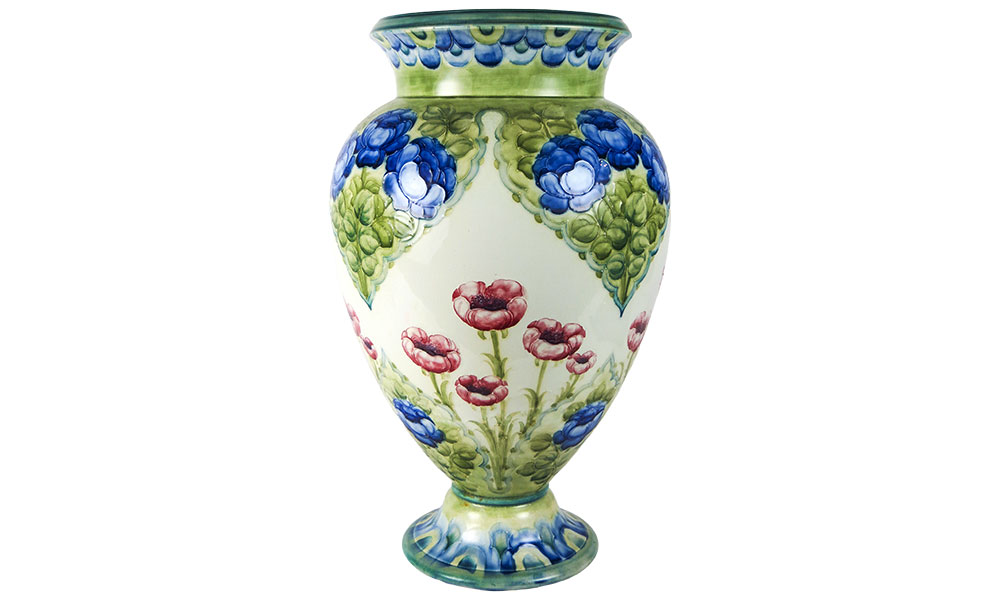
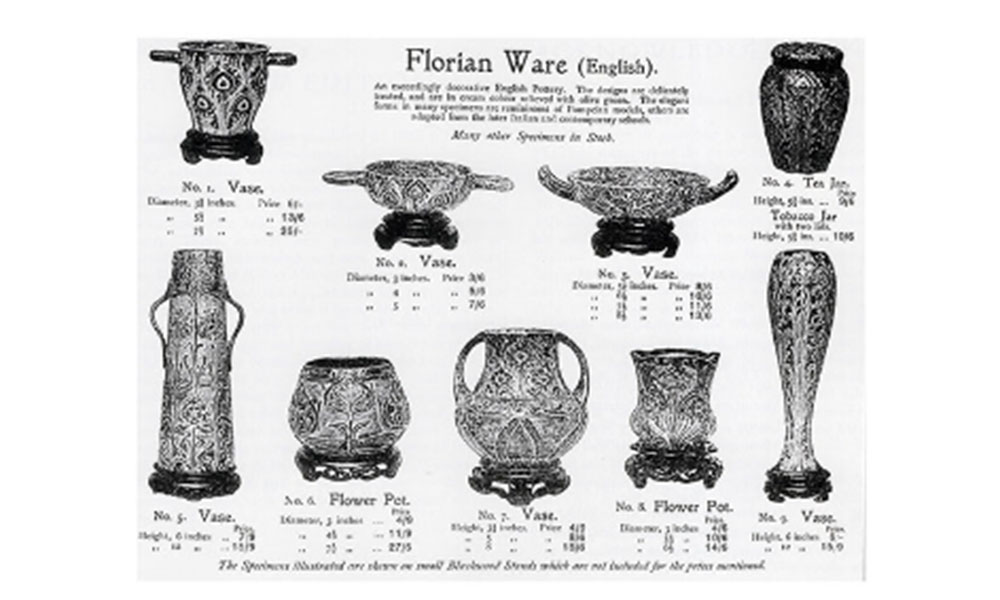
Catalogs from Liberty’s, the fashionable London department store, illustrate some of Moorcroft’s original Florian patterns and shapes. Florian Ware was also popular in Europe and America, where William Moorcroft won his first gold medal at the 1904 St. Louis World’s Fair. Tiffany & Co. was also a major distributor in New York and Marshall Field in Chicago.
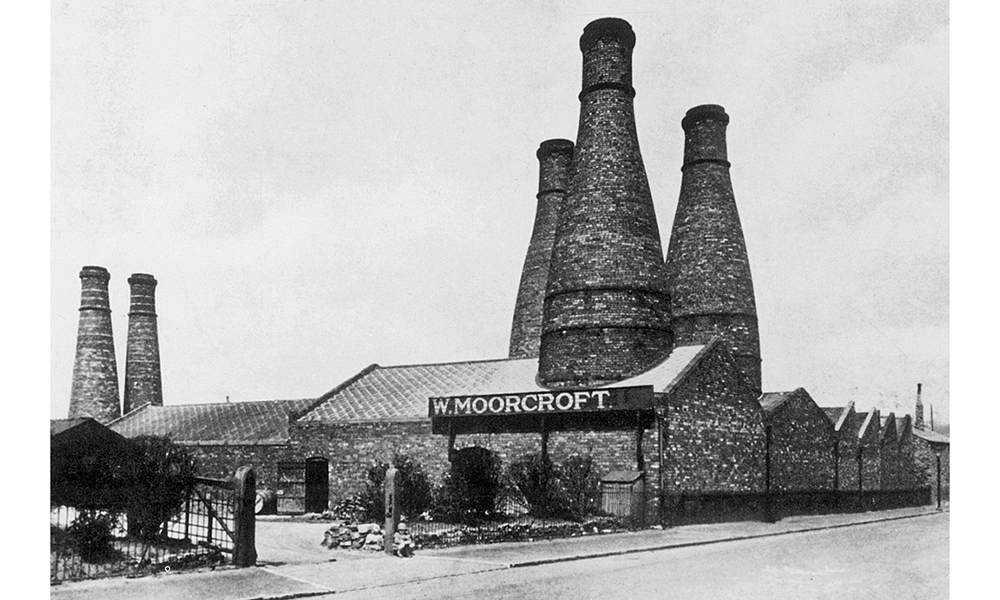
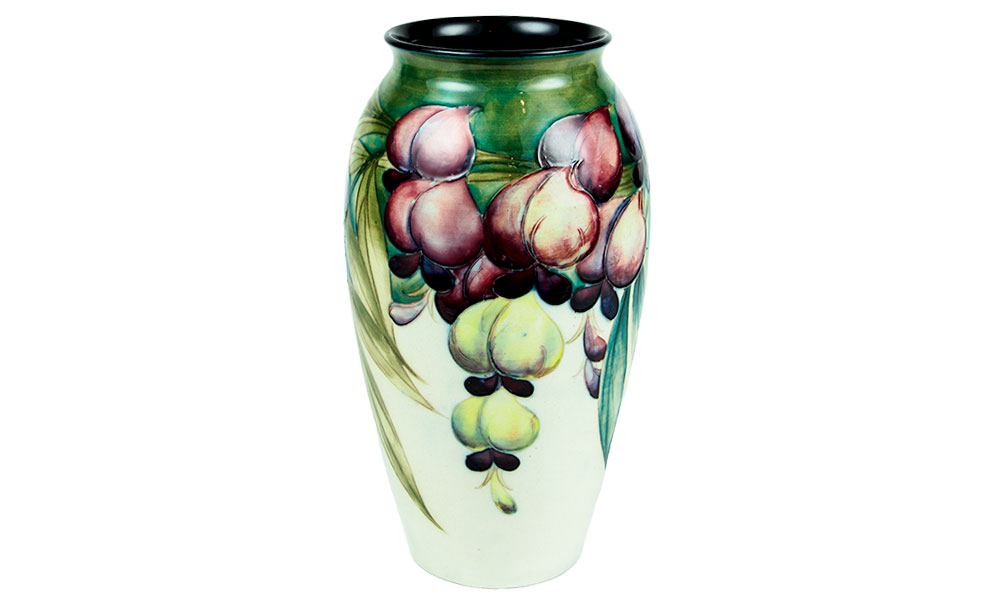
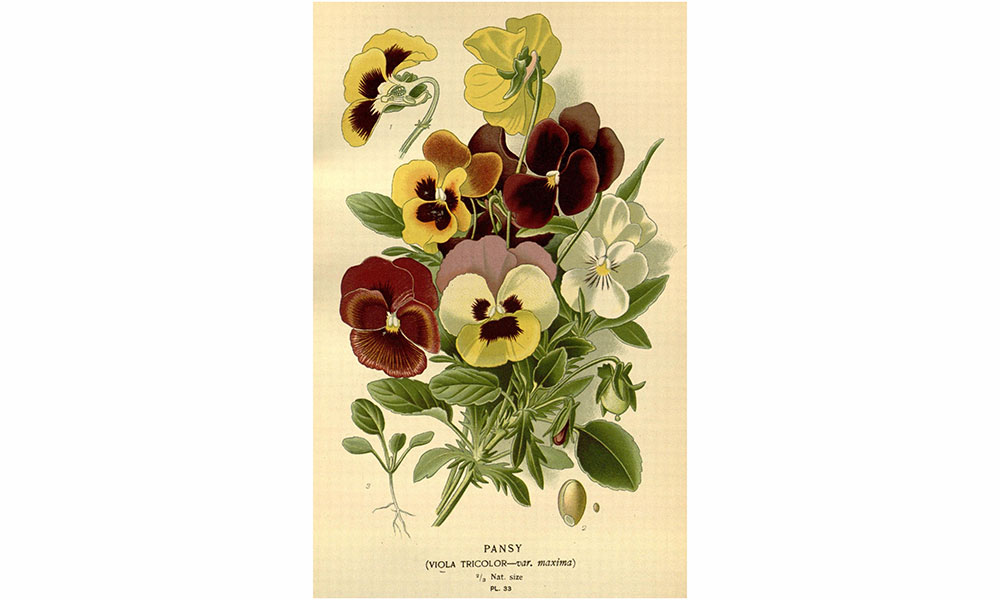
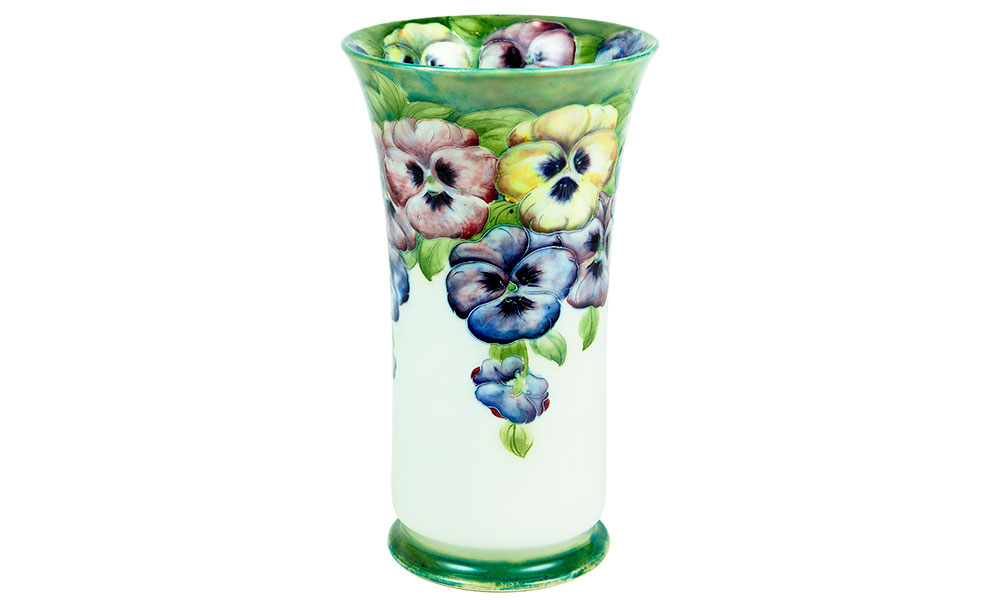
Fueled by his ongoing success and supported by Liberty’s, William Moorcroft opened his own factory in Cobridge in 1913, bringing all his decorators from the Florian Ware department at Macintyre’s. By then, Moorcroft’s new pansy and wisteria patterns flourished across the surfaces of his vases. The cascading blooms of wisteria are associated with long life and endurance due to its ability to survive for centuries. “I cling to thee” was its Victorian message. Pansies symbolize remembrance and thought from the French pensée.

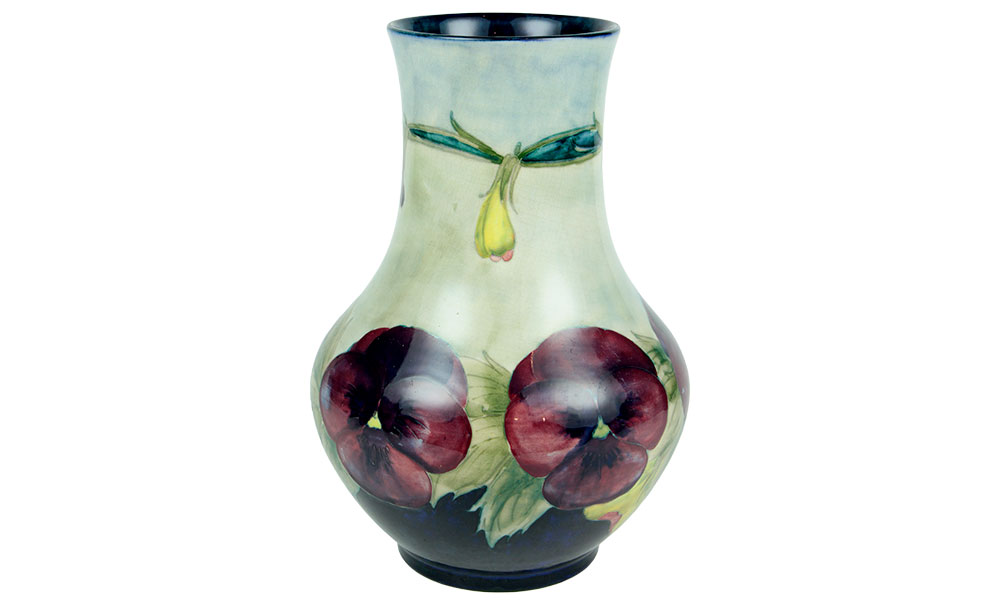
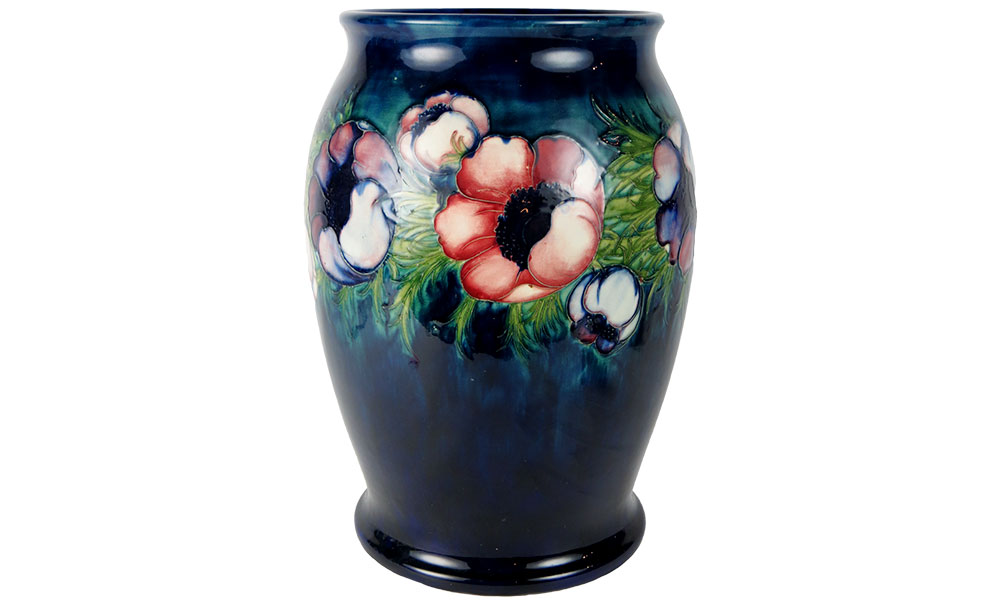
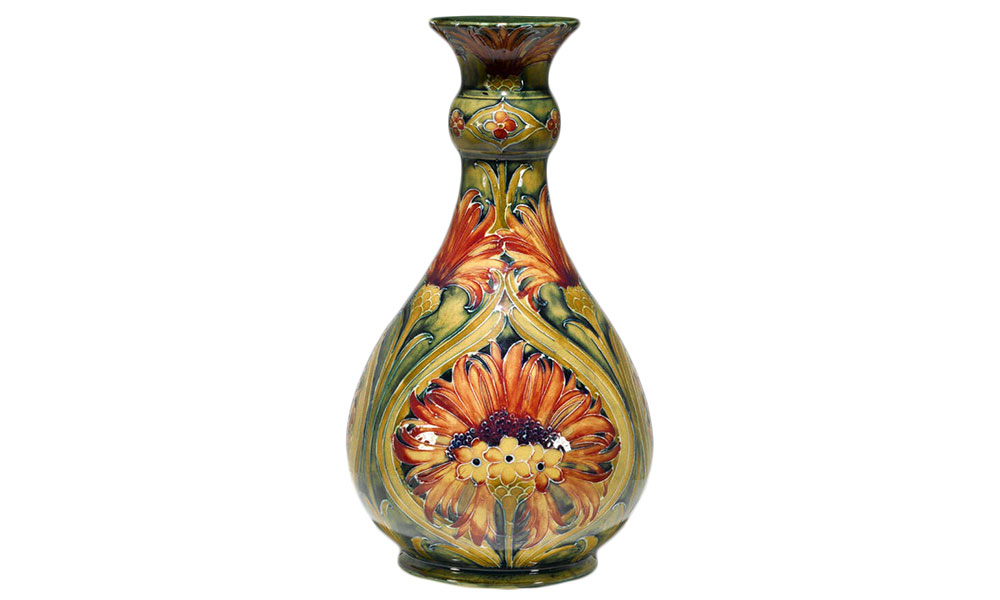
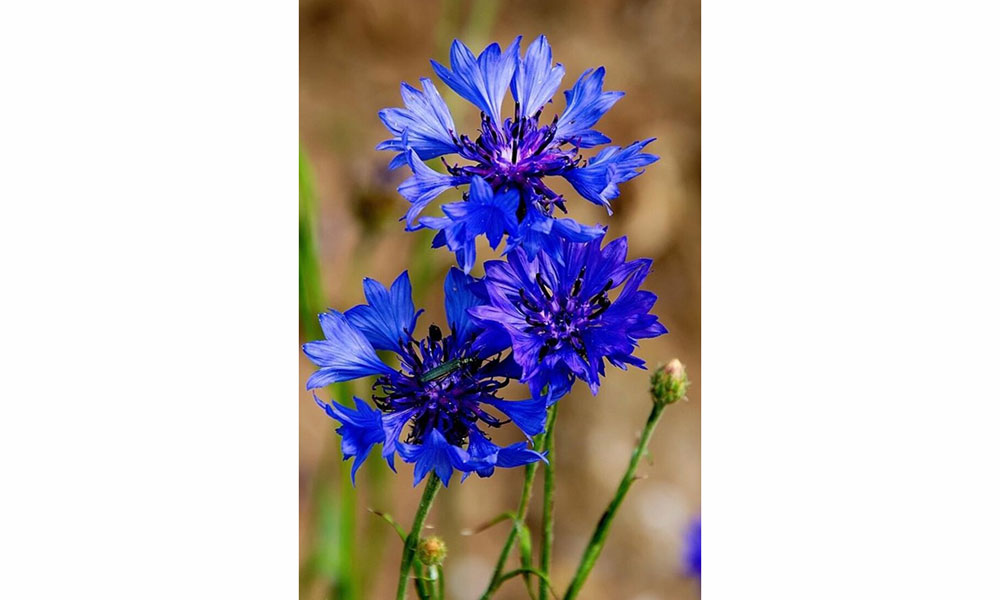
Around 1910, Moorcroft began creating darker, mottled backgrounds and robust designs with stylized scrolling flowers, such as Spanish and Pomegranate. Symbolizing abundance and prosperity, the pomegranate is one of Moorcroft’s most iconic designs, originally produced in association with Liberty’s. Moorcroft’s Cornflower pattern began blue, as in nature, but in the Spanish style, it was rendered in rich reds and greens. In the Victorian language of flowers, the cornflower symbolizes refinement and good fortune.
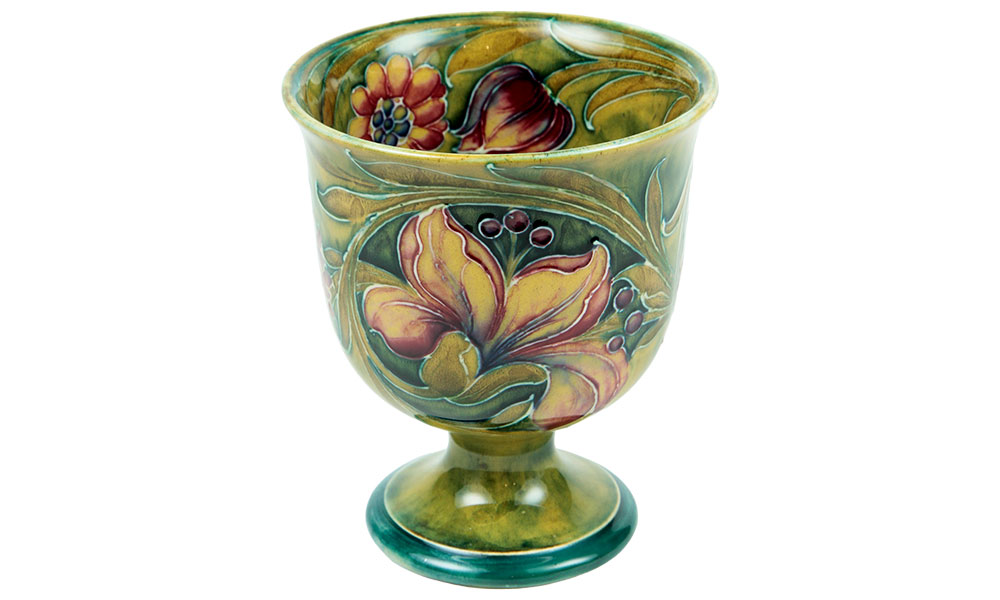
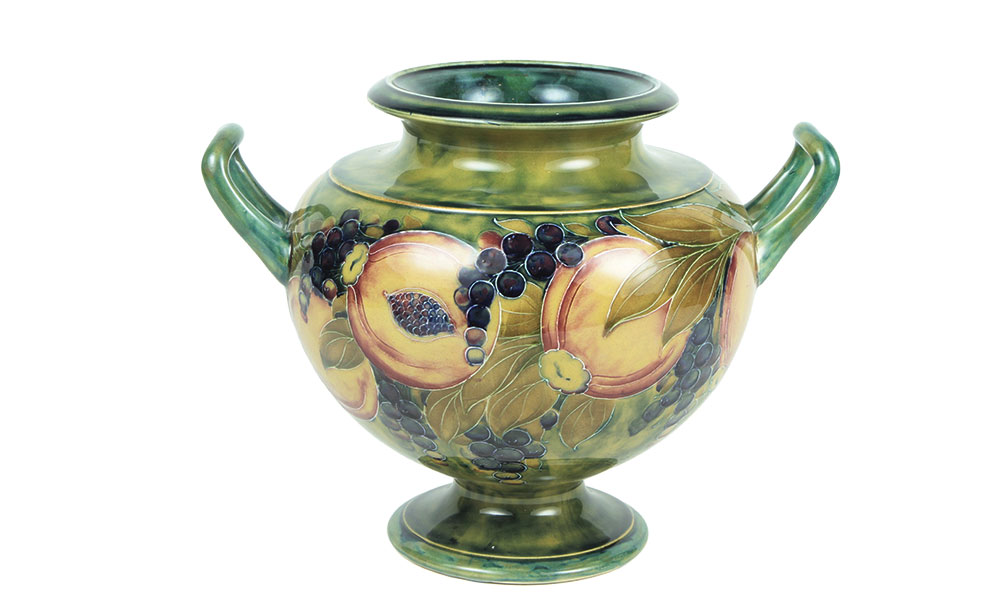
William Moorcroft did not market his Florian collection as part of the frivolous Language of Flowers phenomenon, which faded with the outbreak of World War I. However, his early customers may have been motivated to purchase because they understood the meanings of his favorite flowers. In any case, it has been fascinating to explore Moorcroft’s floral designs in the WMODA collection in light of their history and floriography meanings.
See our beautiful collection of Moorcroft Florian Ware on your next visit to WMODA.